Technical Documents
Specifications
Brand
DehnProduct Type
Modular Surge Protector
Suppressor Type
Lightning Arrester
Maximum Voltage
255V ac
Mount Type
DIN Rail
Maximum Surge Current
25kA
Series
DSH
Minimum Operating Temperature
-40°C
Maximum Operating Temperature
80°C
Length
36mm
Height
90mm
Depth
72mm
Standards/Approvals
VDE, KEMA, UL
Hazardous Area Certification
No
Country of Origin
Germany
Product Details
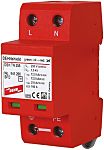
Application-optimised prewired combined lightning current and surge arrester for TN-S systems
Voltage surges, often referred to as spikes or transients are typically caused by switching of fluorescent lights, fuses blowing or nearby lightning activity. The worst voltage spikes are usually caused by lightning strikes and can reach up to 6000V, with current surges of over 3000A. The maximum size of the let-through voltage and current inrush depends on the location within the building's wiring system. BS7671: 2011 Amendment 1 Sections 443 and 534 cover risk assessment and provides guidance on protection of electronic equipment for installation engineers to follow. The fullest information on lightning and surge protection comes from the BSEN 62305 series of standards.

Stock information temporarily unavailable.
362.693 OMR
362.693 OMR Each (ex VAT)
380.828 OMR
380.828 OMR Each (inc. VAT)
1
362.693 OMR
362.693 OMR Each (ex VAT)
380.828 OMR
380.828 OMR Each (inc. VAT)
Stock information temporarily unavailable.
1
| Quantity | Unit price |
|---|---|
| 1 - 1 | 362.693 OMR |
| 2 - 4 | 348.180 OMR |
| 5+ | 331.794 OMR |
Technical Documents
Specifications
Brand
DehnProduct Type
Modular Surge Protector
Suppressor Type
Lightning Arrester
Maximum Voltage
255V ac
Mount Type
DIN Rail
Maximum Surge Current
25kA
Series
DSH
Minimum Operating Temperature
-40°C
Maximum Operating Temperature
80°C
Length
36mm
Height
90mm
Depth
72mm
Standards/Approvals
VDE, KEMA, UL
Hazardous Area Certification
No
Country of Origin
Germany
Product Details
Application-optimised prewired combined lightning current and surge arrester for TN-S systems
Voltage surges, often referred to as spikes or transients are typically caused by switching of fluorescent lights, fuses blowing or nearby lightning activity. The worst voltage spikes are usually caused by lightning strikes and can reach up to 6000V, with current surges of over 3000A. The maximum size of the let-through voltage and current inrush depends on the location within the building's wiring system. BS7671: 2011 Amendment 1 Sections 443 and 534 cover risk assessment and provides guidance on protection of electronic equipment for installation engineers to follow. The fullest information on lightning and surge protection comes from the BSEN 62305 series of standards.